The better I know myself, the easier it is to recognise when I am getting in the way of the work.
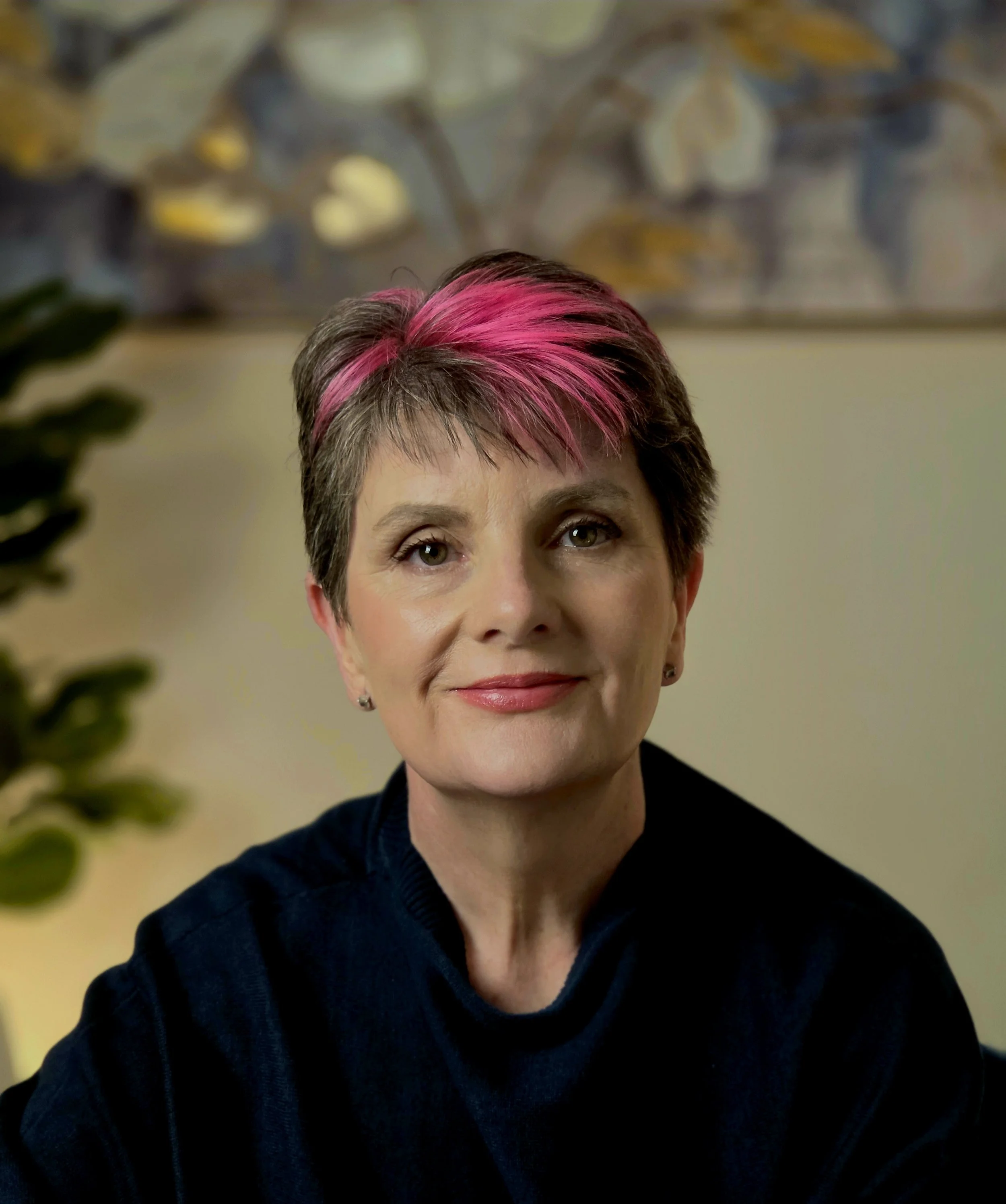
By Karen Baldwin, Evidential Medium
People often imagine mediumship development as a journey outwards.
They picture someone reaching for the spirit world, trying to raise their vibration or searching for the mysterious thing that will finally open the door.
My experience has been almost the complete opposite.
Some of the most important parts of my development have happened when I stopped reaching and started looking within. I had to become familiar with my own thoughts, reactions, beliefs and history. I needed to understand what belonged to me so that, when I worked with another person or the spirit world, I was less likely to place my own story over theirs.
That does not mean becoming perfectly healed, endlessly serene or some spiritually polished version of yourself.
God knows I am none of those things.
It means becoming honest enough to notice when your own humanity has entered the room.
That is why I believe mediumship development is an inside job.
Key takeaways
Mediumship development requires self-awareness as well as sensitivity.
Our personal experiences can influence how we interpret information.
A recipient must be allowed to say no without being pressured or corrected.
Reflection and honest feedback are essential parts of responsible development.
The aim is not to become less human, but to recognise when your humanity is influencing the work.
Knowing what belongs to you
When I first started developing, I thought the challenge was learning to recognise the spirit world.
That was certainly part of it. But I also had to learn to recognise myself.
What does my own mind feel like?
What happens to my awareness when I am anxious, excited or determined to be right?
What assumptions do I make because of my own relationships and experiences?
What happens when I desperately want the information to make sense?
These are not glamorous questions. They do not look particularly impressive on a workshop advertisement either.
But they matter.
A medium does not arrive at the work as an empty human being. We bring our upbringing, relationships, losses, fears, beliefs, expectations and blind spots with us. We cannot remove our humanity, nor should we try.
The responsibility lies in becoming familiar with it.
If I know what I tend to assume, I have a better chance of noticing when an assumption is trying to finish the story for me.
The day my own history answered first
I was once giving a psychic reading to a woman who had recently ended a relationship.
As soon as I became aware of the separation, I responded as Karen rather than remaining with the information. Because of my own past experiences, I assumed the ending must have been good for her.
She corrected me.
The relationship had not been abusive or dreadful. They had cared about each other and had reached an amicable understanding that they were no longer right together.
She was clear. I was wrong.
That moment was valuable because it showed me exactly how quickly personal history can step forward and offer an explanation. I had recognised the end of a relationship, but then I added my own meaning to it.
The problem was not that I had a history. Everyone has one.
The problem was that, for a moment, I allowed mine to speak on her behalf.
I could have defended myself. I could have insisted that she was not ready to accept the “real” meaning. I could have searched for another explanation that made me sound correct.
Instead, I accepted her answer.
That is part of the discipline too.
When a recipient says no, the answer is no. It is not an invitation to overpower them, reinterpret their life or persuade them that the medium understands them better than they understand themselves.
Why sincerity is not enough
Most people who begin this work have good intentions. I certainly did.
But good intentions do not make any of us immune from assumptions.
This is not unique to mediumship. Research across established professions repeatedly demonstrates that sincere, trained people can still have their judgement influenced by cognitive, emotional and social biases.
One review of 149 studies involving allied-health decision-making found that 77 per cent reported at least one outcome indicating bias. The researchers examined more than 30 forms of bias, including stereotyping, anchoring and confirmation bias. Mediumship is not healthcare, but the broader human lesson is relevant: professional intention does not automatically create objective judgement. Decision-making biases in the allied health professions
Research into reflective practice describes the value of stepping back and examining how thoughts, feelings and assumptions affect professional reasoning. It also suggests that reflection can support self-monitoring and ongoing development. Reflective writing in medical education
Again, I am not comparing a medium with a doctor. I am recognising something much simpler.
We are all human.
Our minds try to make sense of incomplete information. They fill gaps, draw conclusions and reach for familiar explanations. Training, experience and reflection do not eliminate that tendency, but they can help us notice it.
Leaving the chair empty

The most useful idea I carried forward from my earlier writing about this subject was the image of an empty chair.
For me, leaving the chair empty means resisting the temptation to fill the reading with myself.
It means not deciding that every grandmother was gentle, every marriage was happy or every difficult relationship was abusive. It means not imposing my religion, history or preferred explanation on the person sitting in front of me.
It also means not filling silence simply because silence feels uncomfortable.
Sometimes the information is not yet clear.
Sometimes I have misunderstood it.
Sometimes I have nothing.
If I rush to occupy every empty space, I leave no room for the communication to develop naturally. I also increase the chance that confidence, imagination or assumption will be mistaken for information.
Leaving the chair empty is not about making myself disappear. I still have to communicate, make decisions and take responsibility for what I say.
It is about remembering that the reading is not there to showcase me.
What responsible reflection looks like
Reflection is not the same as tearing yourself to pieces after every reading.
I know how easy it is to replay every word and obsess over what could have been better. That is not always useful, and it can quickly become more about the medium’s anxiety than the quality of the work.
Responsible reflection is more practical.
1. Know your starting point
Before working, notice what you are carrying.
Are you tired, distracted, angry or unusually invested in doing well? You do not need to be in a perfect emotional state, but you should be honest about whether you are able to work responsibly.
2. Notice when you begin completing the story
There is a difference between communicating what you receive and constructing a narrative around it.
If the information is that a relationship ended, stay with that. Do not automatically decide why it ended, how the person felt or whether it was ultimately good for them.
Let the detail build rather than rushing to make it neat.
3. Allow the recipient to disagree
A recipient is not a prop in the medium’s performance.
They are allowed to say that something does not make sense, that a description is inaccurate or that they do not wish to continue with a particular contact.
Their response is information. Listen to it.
4. Review the work without protecting your ego
Afterwards, ask useful questions.
Where was the information clear? Where did I begin interpreting? Did I respond appropriately when something was not understood? Did I meet the needs of the recipient? What might I handle differently next time?
One of the greatest gifts my training gave me was learning how to evaluate my own work.
5. Remain teachable
Experience does not place anyone beyond correction.
Research into professional decision-making suggests that expertise, reflective reasoning and input from colleagues can all help reduce errors arising from cognitive bias. Cognitive biases associated with medical decisions
In my own development, this has meant returning to training, accepting direct feedback and being willing to reconsider what I thought I understood.
Ten years of development did not teach me that I am always right.
It taught me what to do when I am not.
Does personal development make someone a better medium?
Personal development can help a medium become more aware of what they bring into the work, but mediumship is not therapy and spiritual development is not a replacement for mental-health care.
My own growth has involved several things: mediumship training, lived experience, professional support, trauma therapy, difficult decisions and time.
It would be far too simplistic to credit mediumship with every change in my life.
What development did give me was another reason to become curious about myself. It showed me that my reactions mattered, that my unresolved experiences could affect how I interpreted information and that self-awareness was part of my responsibility to the people who trusted me.
That is quite different from claiming that a person must become perfectly healed before they can work.
There is no perfectly healed person.
There are only people who are willing, or unwilling, to look honestly at themselves.
Frequently asked questions
Why is self-awareness important in mediumship development?
Self-awareness helps a developing medium recognise their own thoughts, emotions, expectations and assumptions. It does not eliminate personal influence, but it makes that influence easier to notice. This supports clearer communication and reduces the temptation to interpret another person’s experience through the medium’s own history.
Do mediums need to resolve all their personal issues before working?
No. Mediums are human beings, and nobody reaches a point of complete emotional perfection. What matters is recognising significant personal triggers, seeking appropriate support when needed and being willing to stop or reconsider when your own circumstances are affecting your ability to work responsibly.
How can a medium tell the difference between information and assumption?
There is no single mechanical test. Development involves becoming familiar with your own mental activity, allowing information to unfold without rushing and examining the accuracy of your work afterwards. Good training and honest feedback are particularly valuable because self-assessment alone can have blind spots.
What should a medium do when a recipient says the information is wrong?
Listen and accept the response. Clarification may sometimes help, but the medium should not pressure the recipient, change the meaning repeatedly or insist that the recipient will understand later. If the information cannot be placed, acknowledge that and continue only if doing so remains appropriate.
Is mediumship development a form of therapy?
No. Mediumship development is spiritual and educational, not psychological treatment. It may encourage personal reflection, but it cannot replace counselling, psychotherapy or other mental-health care. When personal experiences are causing significant distress, support should come from an appropriately qualified professional.
Becoming more yourself
Mediumship development has changed me, but not by turning me into someone endlessly calm, mystical or removed from ordinary life.
I am still direct. I still have a sharp sense of humour. I still become frustrated, get things wrong and occasionally disappear down a rabbit hole because I am determined to understand something.
The difference is that I am more willing to notice what I am bringing into the room.
That awareness helps me step back from an assumption, listen when someone corrects me and admit when I do not have enough information.
The inside job is not about erasing yourself.
It is about knowing yourself well enough that you do not mistake your own voice for somebody else’s.
Keep reading
From Rubbish to Real Mediumship: How an exciting beginning gave way to years of training, correction and a much higher standard.
My Approach: How I approach psychic work and evidential mediumship today.
Boundaries and Expectations: What clients and event attendees can expect from me, and what I will not claim or guarantee.
About Karen Baldwin
Karen Baldwin is a Canberra-based evidential medium who has trained in Australia, Germany and the United Kingdom. Since beginning her formal development in 2016, she has undertaken extensive training with Paul Jacobs and teachers working within the same evidential tradition. Her work includes private readings and public evenings of mediumship.
